

Have you ever dreamed of swimming with turtles in the crystal clear waters of Zanzibar? If so, you are not alone.
Zanzibar is one of the most popular destinations for turtle lovers, as it is home to five different species of these majestic creatures.
Whether you are a nature lover, an animal lover, or just looking for some fun and excitement, swimming with turtles in Zanzibar is an experience you will savor for a long time.
In this article, we will tell you everything you need to know about swimming with turtles in Zanzibar, including where to find them, how to interact with them, and what to expect from this incredible experience.
So, let’s get started already and explore this magical destination.
Zanzibar and Turtles
Zanzibar is an island off the coast of Tanzania in East Africa. It is known for its rich culture, history, and natural beauty. But what makes Zanzibar truly special is its marine life.
The island is surrounded by coral reefs, which provide a habitat for hundreds of species of fish, dolphins, whales, and, of course, turtles.
Turtles are among the oldest living animals on Earth, and they have a special significance in many cultures.
They are symbols of wisdom, longevity, and peace. They are also endangered due to threats such as poaching, pollution, and climate change.
That is why swimming with turtles in Zanzibar is not only a fun and exciting activity but also a way to support conservation efforts and raise awareness about these amazing animals.
There are several places in Zanzibar where you can swim with turtles, but the most famous one is the Mnarani Marine Turtle Conservation Pond.
This is a sanctuary for injured or sick turtles, where they are nursed back to health and released into the wild.
You can visit the pond and learn more about the turtles, their life cycle, and the challenges they face. You can also feed them, touch them, and take photos with them.
But the best part is that you can swim with them in the pond and feel their gentle presence as they glide through the water.
Let’s get into more details on where to find these turtles, shall we?
Swimming With Turtles In Zanzibar: Where to Find Turtles in Zanzibar
1. Mnarani Marine Turtle Conservation Pond
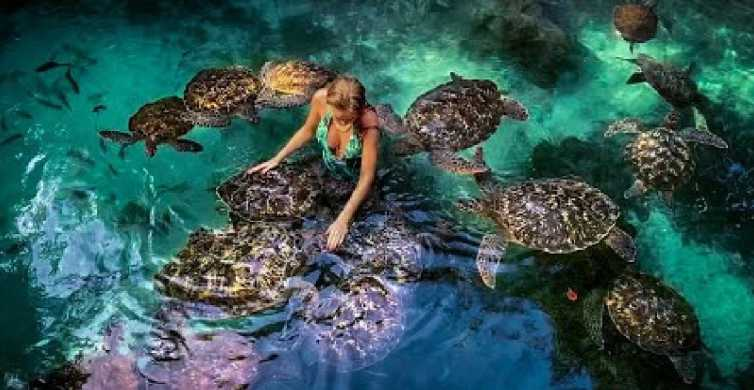
This is a sanctuary for injured or sick turtles, where they are nursed back to health and released into the wild.
You can visit the pond and learn more about the turtles, their life cycle, and their challenges.
You are also allowed to feed, touch, and take photos with them. But the best part is that you can swim with them in the pond and feel their gentle presence as they glide through the water.
The pond is home to five different species of turtles: green, hawksbill, loggerhead, olive ridley, and leatherback.
These turtles are among the oldest living animals on Earth and have a special significance in many cultures.
They are symbols of wisdom, longevity, and peace.
They are also endangered due to threats such as poaching, pollution, and climate change.
The pond is open daily from 9 am to 5 pm, and the entrance fee is 10 USD per person.
The fee includes a guided pond tour, a chance to feed and touch the turtles, and a swim with them in the lagoon.
You can also buy souvenirs and snacks at the pond and support the project by donating or volunteering.
Address: 78H3+23W Nungwi Beach, Street, Nungwi, Tanzania
Also check our guide on: Where To Find Starfish In Zanzibar?: A Journey To The Island!
2. Baraka Aquarium Bungalows
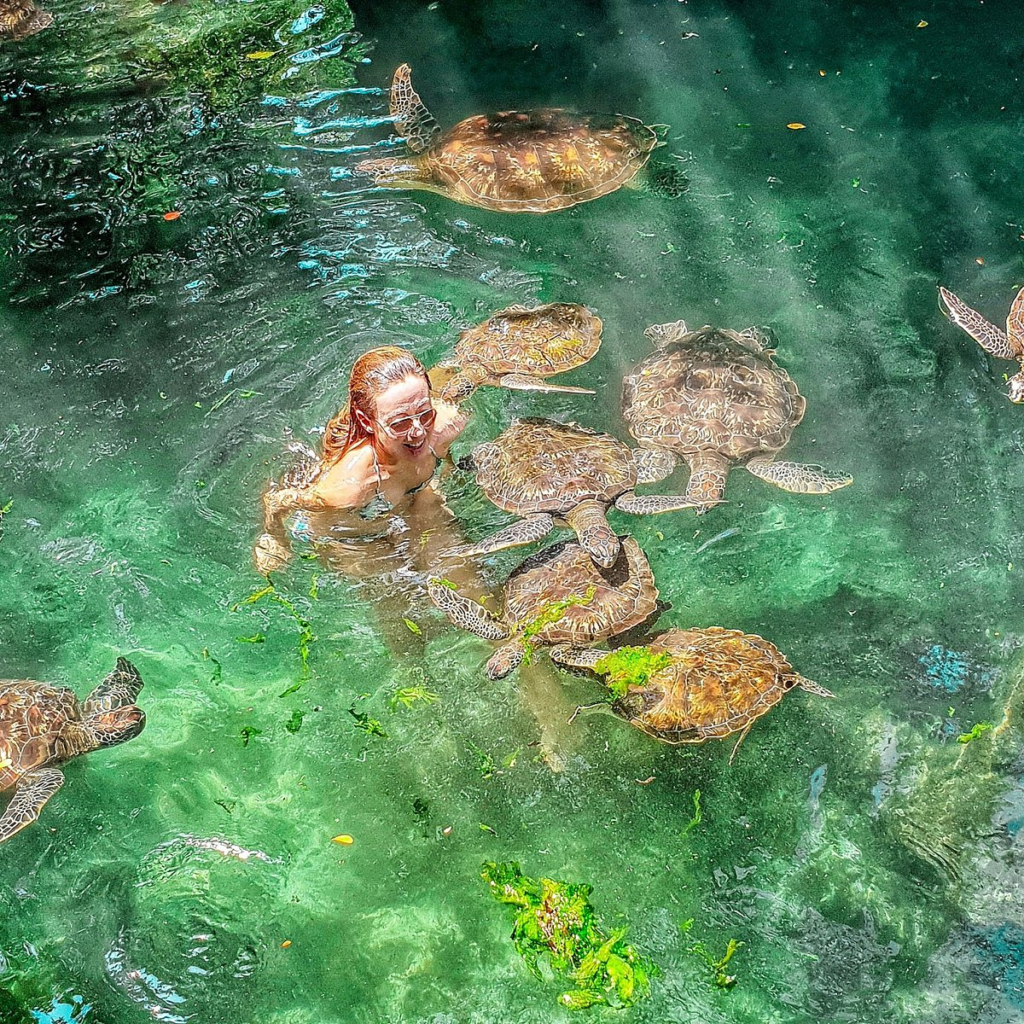
Baraka Aquarium Bungalows are where you can swim with giant green turtles and tropical fish in a natural lagoon.
The turtles here are bought from fishermen and released back to the ocean in the lagoon. You can also snorkel and watch them in their natural environment
Baraka Aquarium Bungalows is a bed and breakfast in Nungwi, Zanzibar, that offers a unique opportunity to swim with giant green turtles and tropical fish in a natural lagoon.
The bungalows are located near the beach and surrounded by nature. The rooms are basic but comfortable, with a furnished patio, a bathroom, and a mosquito net.
The natural lagoon is part of the Baraka Natural Aquarium, a conservation project that rescues turtles from fishermen and releases them back to the ocean.
The turtles are friendly and curious, and you can feed them, touch them, and take photos with them.
You can also snorkel and watch them in their natural environment.
Swimming with turtles in Zanzibar is an amazing experience that you will never forget.
Address: 78G3+CC4, Nungwi, Tanzania
3. The Jozani Sea Turtle Sanctuary
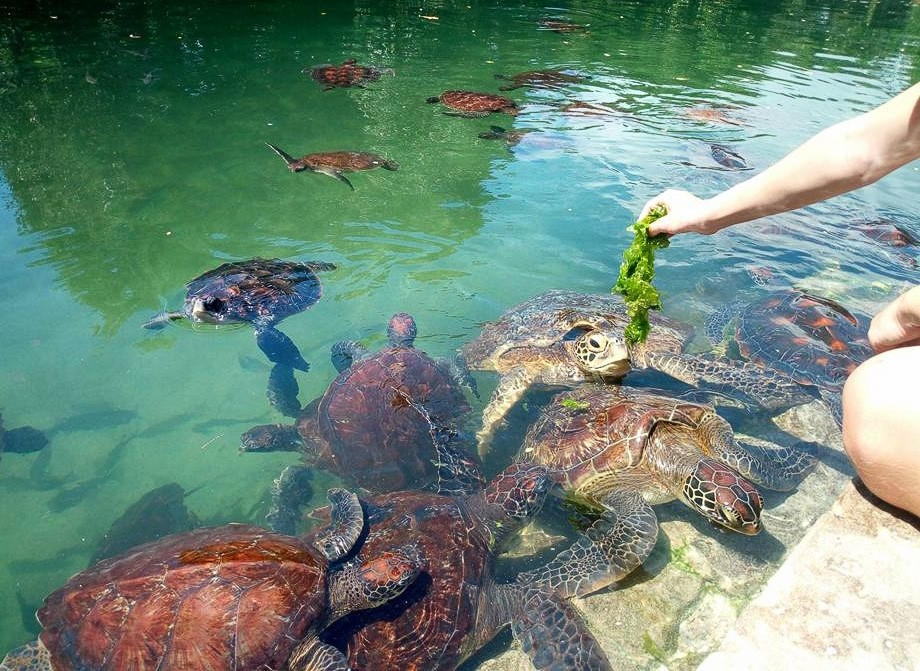
The Jozani Sea Turtle Sanctuary is a community initiative that belongs to local Jozani farm owners.
It was initially created to promote awareness and help educate the public about sea turtle conservation.
Still, it has grown into a beautiful sanctuary that houses various animals, including hawksbill and juvenile green sea turtles, giant Aldabra and leopard tortoises, monitor lizards, and mallet fish.
The Jozani Sea Turtle Sanctuary is a community initiative that belongs to local Jozani farm owners.
The sanctuary is located near the Jozani-Chwaka National Park, about 35 km southeast of Zanzibar Town.
You can get there by bus, taxi, or organized tour.
Address: Jozani, Tanzania
5 Types of Turtles In Zanzibar
1. The Green Turtle
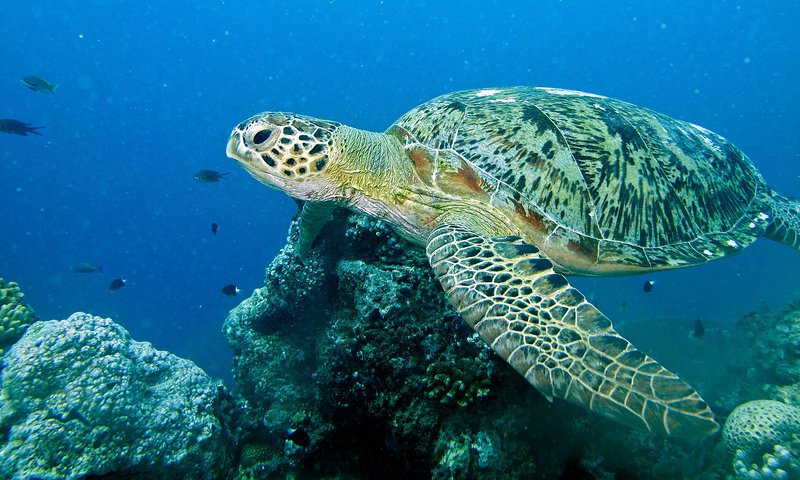
The green turtle is the most widespread species of marine turtle in Zanzibar.
It is also an endangered species that faces habitat loss, poaching, and bycatch threats.
These sanctuaries protect and rehabilitate injured or sick turtles and educate visitors about their conservation.
Green turtles are amazing animals that can swim long distances, dive deep, and live up to 80 years.
Some of the best places to see green turtles in Zanzibar are the Baraka Natural Aquarium, the Mnarani Turtles Conservation Pond, and Misali Island.
They are also herbivorous, feeding mainly on seagrass and algae. I hope you learned something new about the green turtle in Zanzibar.
2. The Olive Ridley Turtle
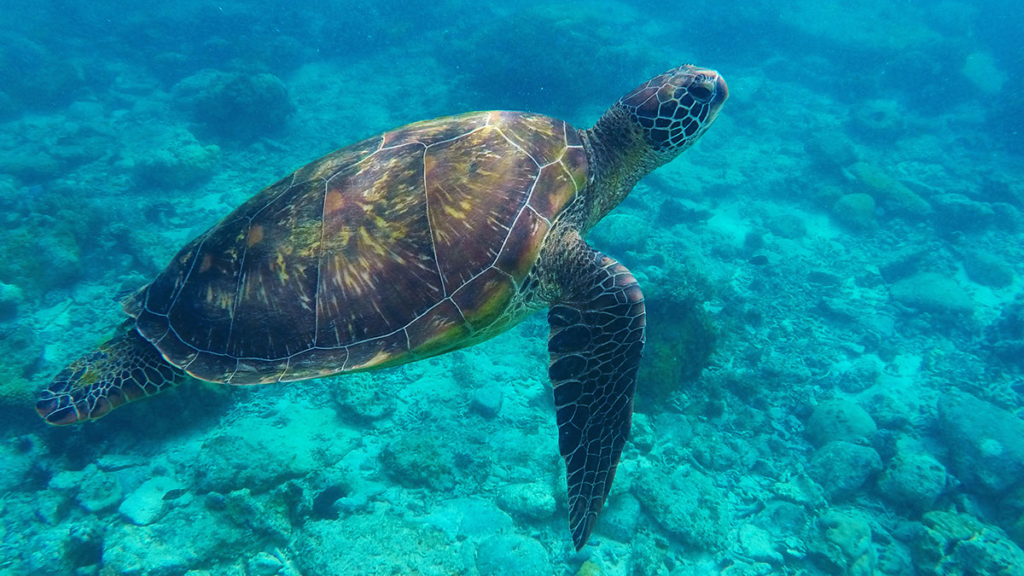
The olive ridley turtle is a rare and endangered species of marine turtle that has been reported to nest in Zanzibar in the past, but not anymore.
The olive ridley turtle is the smallest of the sea turtles and has a distinctive olive-green carapace with six to eight pairs of costal scutes.
It is also known for its mass nesting behavior, called arribada, where thousands of females come ashore to lay eggs simultaneously.
3. The Hawksbill Sea Turtle
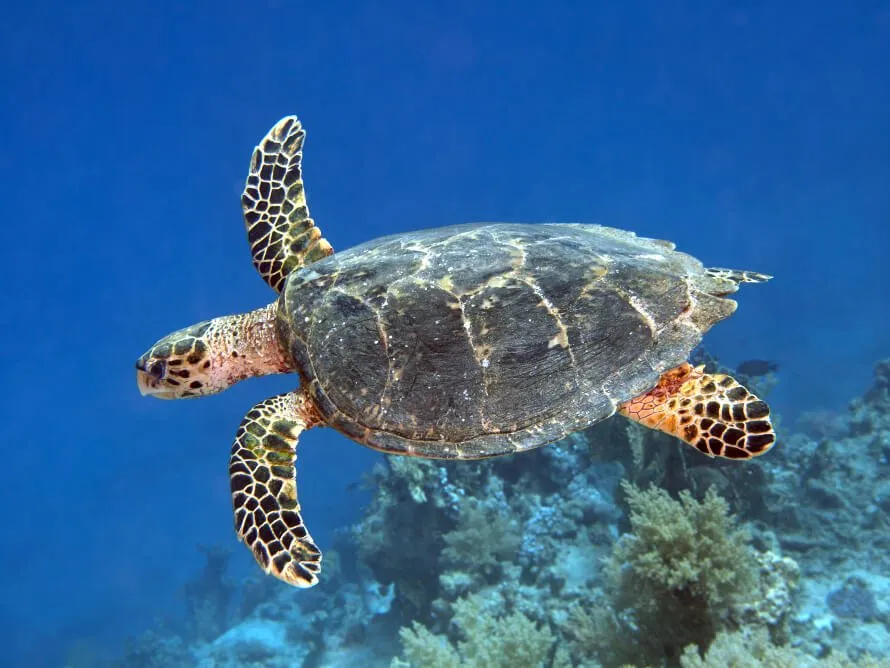
The hawksbill sea turtle is a critically endangered marine turtle species with a distinctive shell with overlapping scales.
It is mainly found in tropical and subtropical coral reefs, where it feeds on sponges, algae, and other invertebrates.
The hawksbill sea turtle is threatened by habitat loss, poaching, bycatch, and climate change.
In Zanzibar, the hawksbill sea turtle is rarely seen, as it no longer nest on the island.
However, some lucky snorkelers may spot it at Mnemba Island reefs or Chumbe Island reefs, which are marine protected areas that host a variety of coral and fish species.
The hawksbill sea turtle is a beautiful and elusive animal that needs our protection and conservation.
Read more: The Best Zanzibar Photo Spots For Instagrammers
4. The Loggerhead Sea Turtle
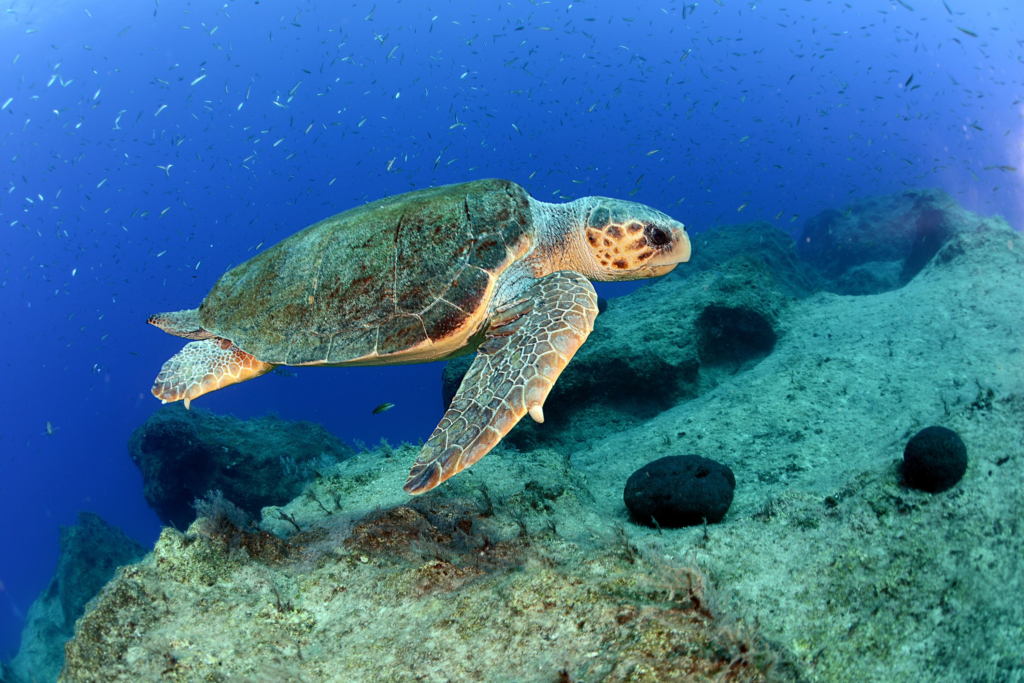
The loggerhead sea turtle is a relatively rare and endangered marine turtle species with a large head and powerful jaws.
It feeds on crabs, mollusks, fish, and other animals. It is mainly found in temperate and tropical regions of the Atlantic, Pacific, and Indian Oceans.
In Zanzibar, the loggerhead sea turtle does not nest but uses the waters around the island as a foraging ground.
Some of the loggerheads in Zanzibar come from South Africa, nesting on Tongaland and Natal’s beaches.
They can swim long distances and cross ocean basins to reach their feeding habitats.
5. The Leatherback Sea Turtle
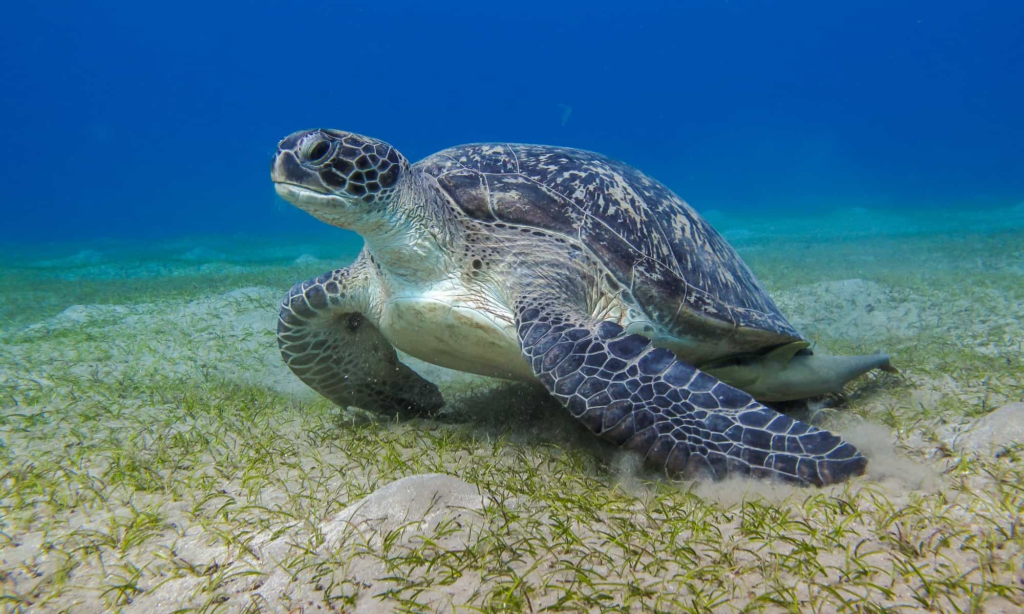
The leatherback sea turtle is the largest and most migratory of all sea turtles.
It can reach up to 8.5 ft (2.6m) in length and 2000 lbs (900 kg) in weight. It has a flexible, rubbery carapace allows it to dive deeper than 4100 feet (1250 meters).
Leatherback turtles are endangered due to habitat loss, overexploitation, and bycatch.
Leatherback turtles are not known to nest in Zanzibar but may occasionally visit its waters during their long-distance migrations.
Conclusion
Zanzibar is a paradise for turtle lovers. Whether you want to see them hatch, swim with them, or learn more about their conservation, you will find plenty of opportunities to get close to these gentle giants.
Swimming with turtles in Zanzibar is not only a fun and thrilling adventure, but also a way to support the local communities and the environment.
Being surrounded by these majestic creatures in their natural habitat is a memory you won’t forget!
Don’t wait any longer, book a trip to Zanzibar and swim with turtles!